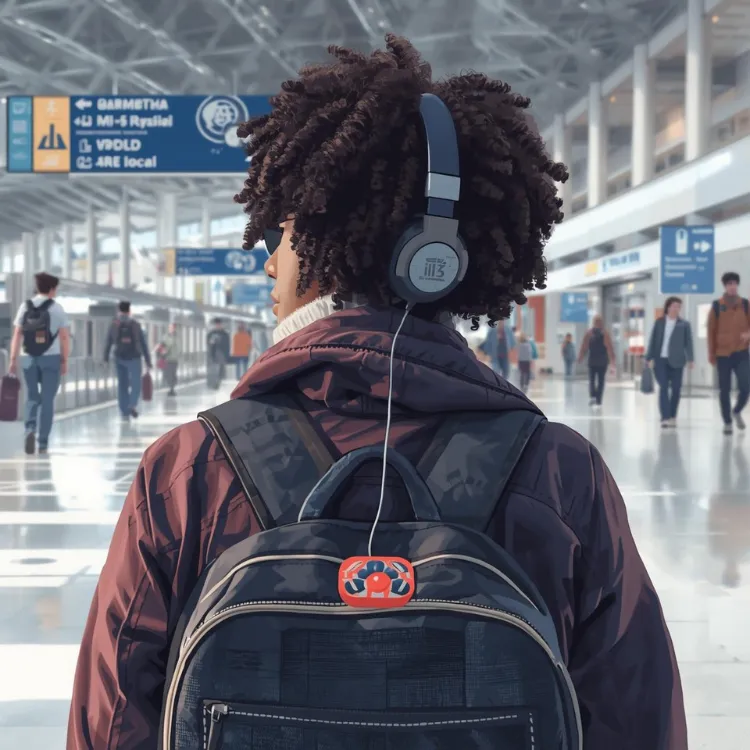
Why Airports Overwhelm Neurodiverse Travelers
The Things I Hate About Airports (And Why It Matters for Neurodiverse Travelers)
I usually write about all the things I love about travel — the excitement, the new experiences, the joy of discovery. But today, I want to talk about a few things I absolutely detest.
Airports are supposed to be gateways to adventure. But for many neurodiverse travelers, they can feel like sensory obstacle courses designed to test your patience, endurance, and very sanity. What might be “minor annoyances” for some can quickly become overwhelming barriers for others.
Sensory Overload: More Than an Annoyance

Airports bombard us with stimuli in ways most people don’t even notice. For neurodiverse travelers, the experience is often extreme. Here are some examples:
Bright overhead LEDs that feel like they’re trying to burn a hole through your soul
The child in the security line who can cry on both the inhale and exhale
Key clicks or phone reels blasting on full volume with zero regard for headphones
Never-ending announcements from one blown-out speaker in multiple languages on high volume
Loud talkers seated far too close, who haven’t learned the phrase “say it, don’t spray it”
Perfume blasts in duty-free stores aimed directly at you
Automatic toilets that flush three times when you hover, then refuse to flush when you’re done 🚽
Hand dryers powered by jet engines in tiled echo chambers that could launch you into orbit 💨🛫
For neurodiverse travelers, this isn’t just “annoying.” It can feel like the universe is conducting a giant experiment in sensory overload . And yet, most of these challenges are invisible to the average travel professional.
The Travel Industry Often Ignores Real Barriers
What frustrates me even more is how often the travel industry pretends these barriers don’t exist:
Sensory needs are dismissed as mere “preferences.”
Overwhelm is labeled “overreacting.”
Neurodiverse travelers are told to “just deal with it — everyone finds airports stressful.”
But here’s the truth: travel shouldn’t require masking, meltdowns, or days of recovery afterward. For many neurodiverse adults, especially solo travelers or those flying for work, the system is built entirely for neurotypical brains, leaving so many brilliant, capable people struggling just to navigate the basics.

Invisible Barriers Travel Pros Often Miss
Most travel professionals are trained to consider wheelchair accessibility, luggage limits, and visa requirements. But the invisible barriers faced by neurodiverse travelers often go unrecognized, including:
Sensory overload
Transitions and changes in routine
Decision fatigue
Executive function demands
Emotional regulation challenges
Communication differences
Overstimulation and shutdowns
Cumulative micro-barriers that make travel feel impossible
Each of these factors alone might seem small. But together, they can make someone feel like travel is just not worth it. Noise-canceling headphones may help someone survive, but survival isn’t thriving. The industry relying on this as a “solution” is insufficient — and frankly, lazy.
Why This Matters
For the past two years, I’ve been training travel professionals to understand accessibility. But there’s an entire population of neurodiverse adults who are brilliant, adventurous, and capable — yet still face barriers to travel:
People who want to see the world without relying entirely on someone else to make it possible
Travelers who crave independence but need systems that understand their needs
Individuals who shouldn’t have to expend all their energy just to navigate the airport
Travel should be empowering, not exhausting. It should feel joyful, not like a test of endurance or emotional stamina.
Something New is Coming
I’ve been building something specifically for neurodiverse travelers — something that will make:
Solo travel possible
Business travel manageable
Adventure travel exciting
Long-overwhelming trips not just feasible, but joyful
This isn’t about providing temporary coping mechanisms. It’s about designing experiences and tools that allow neurodiverse adults to travel independently, confidently, and happily.
Because travel should be more than survival. It should be freedom, adventure, connection… and yes, joy.
